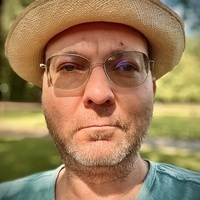
I’m six weeks out from abdominal surgery, and I’m finishing up three weeks of rehabilitation. My belly still aches when I walk more than a short distance. There’s still water in my lungs from when they were punctured at the hospital, and that scares me a little—I need to watch it carefully so it doesn’t turn into pneumonia.
But here’s what I know: I need the energy to play with my kids. I need the energy to cook again for my family. I need the strength to simply move around and do household chores. And I want to be able to go out into the world again and live my life.
That’s my goal for 2026. Just… being there again. Fully present. Able to do the things that matter.
Reality Check
Recovery from abdominal surgery with pleural effusion isn’t a sprint. It’s measured in months, not weeks. The standard timeline is 6-8 weeks to return to basic activities—but that’s without the complication of fluid in my lungs. With that factored in, I’m looking at 3-6 months to rebuild my cardiovascular capacity properly. The first half of 2026 is going to be slow. Intentionally slow. And I’m okay with that.
What I’m not okay with is rushing back and ending up with pneumonia or setbacks that set me back months instead of weeks. So the pleural effusion isn’t just a medical fact—it’s the thing that shapes every decision I make right now.
What I’m Watching For
My priority isn’t hitting the gym hard. It’s breathing properly and keeping my lungs clear. That’s the foundation everything else sits on.
I’m doing these breathing exercises daily:
Diaphragmatic breathing— The basic one. I lie on my back, hand on my chest, hand on my belly. Breathe in through my nose so my belly rises, breathe out slowly through pursed lips. This activates my parasympathetic nervous system (the “rest and digest” one), which helps with both pain and anxiety. I do this for 5–10 minutes when I wake up, after meals, and before bed.
Stacked breathing— This is the one that research shows works best for pleural effusion specifically. I exhale completely, then take deep breaths on top of each other (stacking 2–4 of them) until my lungs feel full, hold for a count of 5, then exhale slowly. I do 3–5 cycles twice a day. If I feel dizzy or get chest pain, I stop immediately.
I’m also tracking my temperature twice daily for the next 2–3 weeks. If it hits 38°C or higher, or if I suddenly get worse shortness of breath, that’s when I call my doctor. Those are my red lines.
My Timeline
Weeks 1–4 (Now through late January): Walking is my exercise. I’m building from where I am now—short distances that don’t aggravate the incision—toward 20 minutes twice daily. Walking slowly, deliberately, like I’m with a toddler. The breathing exercises are the real work. I’m also following the “talk test”: if I can’t carry a conversation while moving, I’m doing too much.
Weeks 5–8 (February–early March): This is when I introduce light resistance. Not the dumbbells yet—I mean resistance bands and very controlled movements. Seated exercises. Longer walks, maybe with a slight incline. My belly should be feeling better by then, but I’m not pushing it.
Weeks 9–12 (Mid-March through April): Light strength work becomes real. I can start using my dumbbells, but starting light. Core activation work like modified planks and bridges. Low-impact cardio like rowing.

Months 3–6 (May–June and beyond): Gradual return to normal. The goal by summer is to be able to play with my kids without thinking about my incision, to cook for my family without exhaustion, to move through my house and my life without it being a project.
Fuel for Recovery
I can’t out-exercise a bad diet, and right now, diet is doing more for my recovery than anything else. My body needs specific nutrients to heal.
Protein is the foundation. I’m aiming for 1.2–1.6 grams per kilogram of body weight daily. For me, that’s real food: chicken breast, fish, eggs, Greek yogurt, legumes, tofu. Protein at every meal, not just dinner. This is what actually rebuilds tissue.
Iron matters because surgery depletes it. I’m eating lean red meat, spinach, and fortified cereals. Not obsessively—just making sure it’s in my rotation. The same goes for zinc (oysters, seafood, lean beef, nuts), which accelerates healing, and vitamin C (citrus, berries, red peppers, broccoli), which builds the collagen my incision needs.
Fiber and water are the boring but critical ones. Pain medication constipates you, which is miserable on top of everything else. I’m aiming for 25–30 grams of fiber daily and 1 liter of water. It’s not glamorous, but it works.
I am using the MacroFactor app to track my macros, but not obsessively so. Just to make sure I am on the right track. I’m making sure I’m eating protein at every meal, getting my vegetables in, and staying hydrated. Simple, sustainable, and it actually fuels recovery instead of just existing.
Equipment
Right now I have a small dumbbell setup at home. It’s fine for where I am, but as I progress, I’m going to need something more flexible. A cable machine or multi-purpose workout rack would let me start with micro-weights (1–2.5 kg) that I’ll actually be able to handle in early February, and scale up smoothly as I get stronger.
I’m not looking for anything fancy. I want something that gives me:
- Adjustable resistance starting really low
- Smooth, controlled movements (no jarring)
- Multiple positions so I can work around my still-healing core
- Something that’ll serve me well long-term, not just during recovery
I’ll research the actual equipment once I’m further along and have a clearer sense of what my space can handle and what my budget allows. For now, the dumbbells are enough.
Accountability
I’m writing this down—publicly, on my blog—because I need to be accountable to myself. Recovery isn’t motivational. It’s not fun. It’s slow and frustrating and there are days when I wonder if my body will ever feel normal again.
But the alternative is worse: staying sidelined, being unable to be fully present with my kids, unable to contribute to my family the way I want to, unable to just live.
So this is my commitment: I’m taking the first half of 2026 to heal properly. I’m doing the breathing exercises even when they feel pointless. I’m watching the pleural effusion like a hawk. I’m walking when I don’t feel like it. I’m eating protein and getting good sleep and being honest about when I’ve done too much.
And by summer 2026, I’m going to be able to do the things that matter.
That’s the goal. That’s the plan. And I’m going to stick to it.