
I lost all six of my AI agents yesterday afternoon because I updated Hermes at the wrong time.
I was setting up the voice pipeline for my agent team on the Raspberry Pi. Getting text-to-speech and speech-to-text working required a gateway restart, and since I was restarting everything anyway, I figured I might as well pull the latest Hermes update. Two birds, one reboot.
Big mistake.

After the restart, every agent gateway came up clean. Config looked fine. Health checks passed. But the moment any agent tried to call the Z.ai API for an actual response: nothing. Timeouts, connection resets, silent failures. I had a house full of agents that could boot up but couldn’t think.
So I started debugging. Checked the network, ran traceroutes, verified DNS resolution. Everything looked normal. The Pi could reach Z.ai’s servers just fine from the command line. The problem only appeared when Hermes tried to make the API call.
I brought Claude in to help dig through the logs. Over an hour of connection errors, TLS handshakes, pool timeouts. Every log file pointed at the network. But the network wasn’t the problem. I could ping the endpoint. I could curl it. The connection worked everywhere except inside Hermes.
Meanwhile, I’m in the Hermes Discord, asking the developers. They looked at my logs and told me it was a network failure on my end. Couldn’t think of any code changes that would cause this behaviour. From their perspective, Hermes was innocent.
And Z.ai? Their end looked fine too. No outages, no changes logged around that time. “Works for us,” effectively.
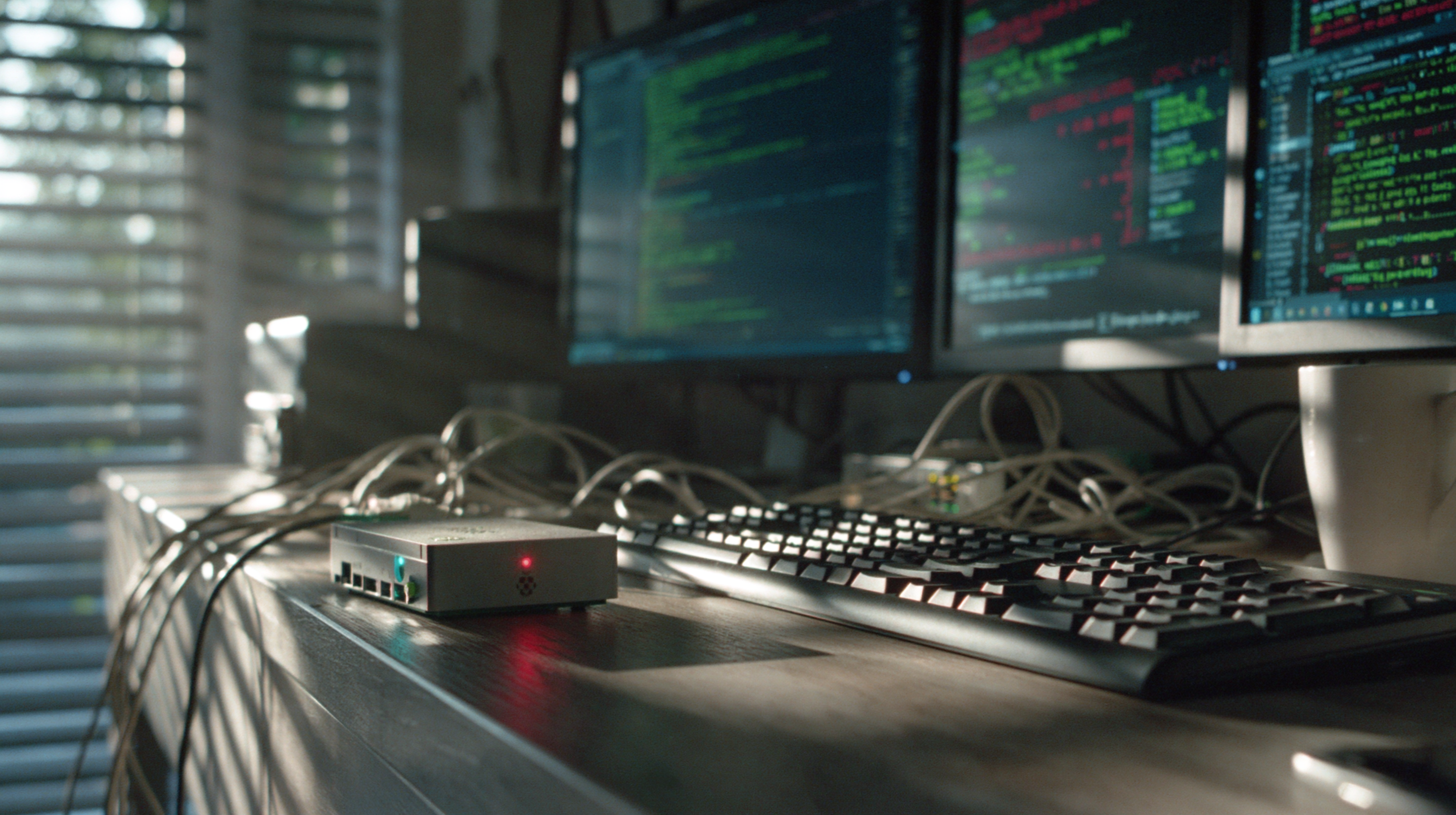
The problem with this kind of failure is that the logs don’t lie, but they don’t tell the truth either. Every error message said connection failure. Every diagnostic I ran said the network was fine. Both of these things were true. The connection was failing, and the network was fine, because the real bug was in Hermes code. Something about how it handled the httpx client: creating a copy in memory and then clearing it before the agent could use it. The symptoms looked exactly like a network problem. The cause was a software update that broke its own connection handling.
The breakthrough came when I did the one thing nobody had suggested: I downgraded Hermes.
Everything worked instantly. All six agents connected, responded, did their thing. So I upgraded again. Broken. Downgraded. Working. That binary test was all the Hermes devs needed to narrow it down. They found the issue, shipped a fix, and I upgraded again. This time it stuck.
But I’d lost the whole afternoon.

What made this frustrating wasn’t the bug itself. Bugs happen. What stung was the false trail. Every diagnostic pointed at the network. And why wouldn’t they? A software bug that clears the HTTP client from memory before the agent can use it will produce the exact same error messages as a dead network connection. The logs can’t tell the difference. I couldn’t tell the difference. The Hermes devs couldn’t tell the difference. Not until I proved it with a downgrade.
In postmortem culture, this is a familiar pattern: the symptoms of a software bug perfectly mimicking an infrastructure failure. Dan Luu maintains a collection of these: failures where the obvious explanation is wrong. Cloudflare went down once because of a single regex. GPS satellites got knocked offline by a buffer overflow. My agents went dark because Hermes was clearing its own httpx client from memory.
The lesson is the one I already knew but chose to ignore yesterday: never combine two risky operations into one restart. Updating Hermes was fine. Restarting the gateway was fine. Doing both at the same time meant I couldn’t tell which one caused the problem, and I couldn’t easily undo just one of them. The “might as well” impulse is how most of these incidents start.
The other lesson is that “looks like a network issue” is the debugging equivalent of “it’s not our fault.” It’s a conversation ender. Everyone nods, everyone agrees, nobody digs further. When someone tells you it’s a network problem, the instinct is to believe them, because usually it is. This time it wasn’t. The Hermes devs dug in once I gave them the binary reproduction case: upgrade breaks, downgrade fixes, upgrade breaks again. That’s the kind of evidence that cuts through confident wrongness. But getting to that point cost me an afternoon I’d rather have spent on literally anything else.
At least I got a Glitch Diary entry out of it.
This is part of The Glitch Diary, a weekly series about what actually happens when you live with LLMs.